
English| EUR
Suggested for you
More currencies
Choose a language
Augusta sits at the convergence of the Indian and Southern Oceans, placing it directly along the humpback whale migration corridor between Antarctic feeding grounds and tropical breeding waters. Between June and September, thousands of whales pass within sight of the coast. This augusta whale watching review walks through what happens on a standard cruise, from boarding to return.
Quick answer
Augusta whale watching cruises depart daily at 10:00 from Augusta Boat Harbour and run for approximately three hours along the continental shelf. Standard adult tickets are priced at 95 AUD per person. The boats operate seven days a week from 09:00 to 17:00 during the migration season, with arrival recommended between 09:30 and 10:00 to allow time for check-in and seat selection before departure.
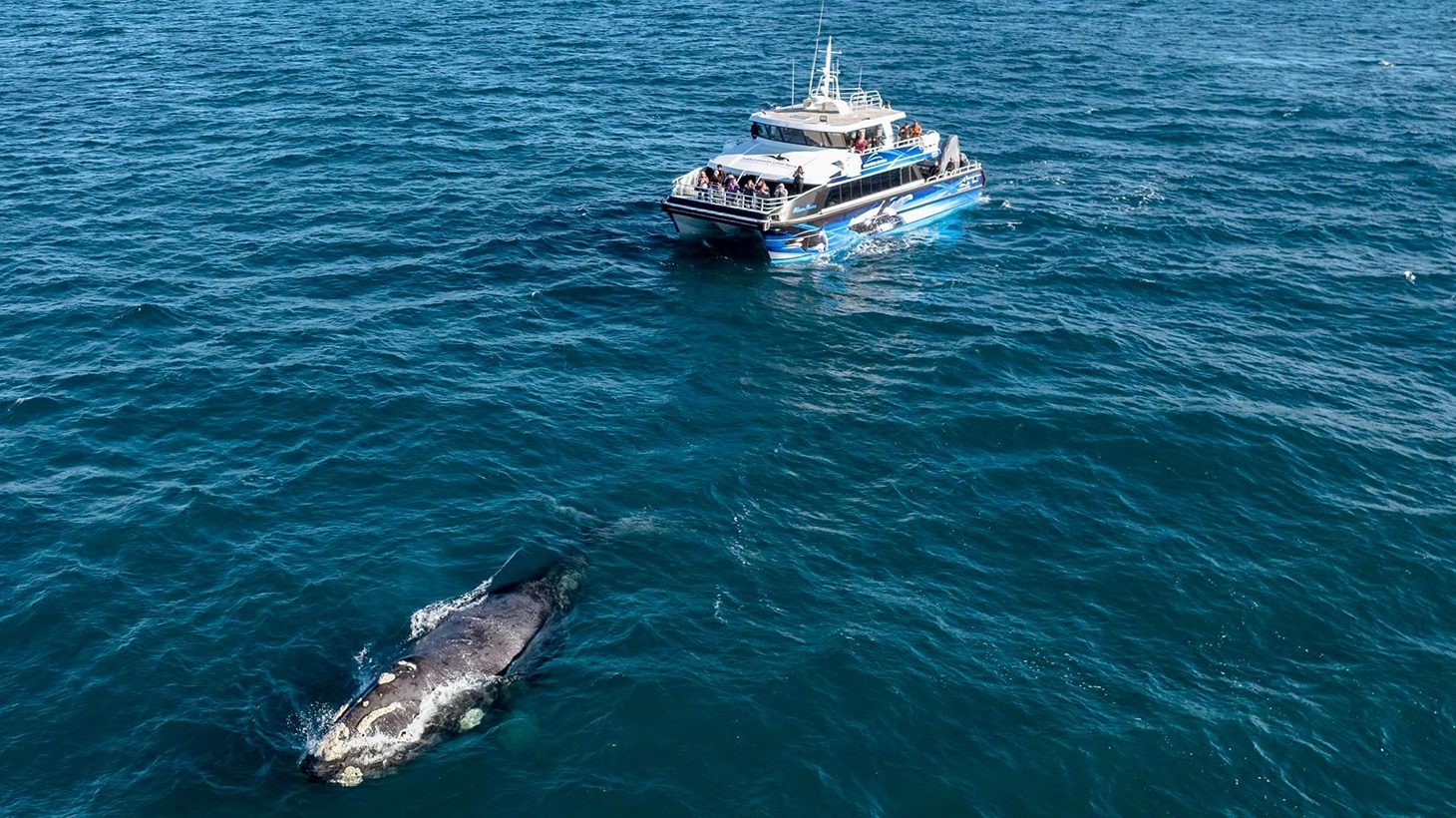
The continental shelf drops away less than two kilometres from Augusta's coastline, creating upwelling zones that attract krill and baitfish—and the humpback whales that follow them. During the southern migration between late May and early September, pods of two to six whales pass through Flinders Bay daily, often breaching and tail-slapping within 200 metres of the tour vessels. The proximity is not accidental: operators hold permits to approach within regulated distances, and the shallow bay concentrates whale activity into a narrow corridor. Cruises leave from Augusta Boat Harbour on Leeuwin Road, a working harbour that also serves commercial fishing and recreational vessels. Boarding begins fifteen minutes before the scheduled departure, and passengers are assigned to either the enclosed lower deck or the open upper deck depending on weather and ticket type. The vessels are custom-built catamarans with wide beam decks, low freeboard for photography, and hydrophones that broadcast whale vocalisations through the cabin speakers. Crew commentary is continuous and focuses on identification, behaviour and migration biology rather than entertainment. Sighting rates during peak season—July and August—exceed ninety percent, though the quality of encounters varies with sea state, pod size and whale behaviour. Breaching and pectoral slapping are common when pods include juveniles; mature adults migrating south in September tend to travel faster and surface less frequently. The return journey follows the same route, passing Cape Leeuwin and its lighthouse before re-entering the harbour. No food is sold onboard; passengers bring their own provisions or purchase supplies in town before departure. Whale watching in Augusta operates under strict federal and state guidelines governing approach distances, engine speeds and interaction duration. Operators are required to cut engines when whales approach voluntarily, and drones are prohibited within the marine park. The result is an experience shaped by the animals' behaviour rather than scripted for guaranteed spectacle. Weather cancellations are uncommon but do occur when swells exceed two metres or winds reach twenty-five knots, in which case operators offer rebooking or full refunds.
“The continental shelf drops away less than two kilometres from Augusta's coastline, creating upwelling zones that draw humpback whales within 200 metres of tour vessels.”
The optimal window for whale watching in Augusta spans from late May to late August, when migrating humpback and southern right whales gather in Flinders Bay. Morning departures offer the calmest sea conditions before afternoon winds pick up.
Mild, winter winds, 10°C–16°C
This period marks the peak of the northern humpback migration. You will likely observe active male humpbacks forming competition pods.
Cooler, occasional winter showers, 9°C–15°C
Southern right whales enter the sheltered bay to calve and nurse. You can witness mothers interacting with newborn calves in shallower waters.
—
Tours departing in the morning typically experience calmer waters. Lower wind speeds improve visibility and offer a smoother ride.
Verdict: Book a Tuesday to Thursday tour departing at 10:00 from June to August, arriving by 09:30 for the calmest ocean conditions and best viewing opportunities.
Augusta whale watching operations are open daily to accommodate visitor schedules throughout the week.
Whale watching departures are located at the Augusta Boat Harbour, situated along Leeuwin Road. The most direct approach for visitors is via car, as the harbour is located a short drive south of the Augusta town center.
Follow Bussell Highway (Route 10) south into Augusta and continue onto Leeuwin Road
Local taxi services from Augusta town center
Not recommended due to distance from town center
Plan your arrival for the best arrival window of 09:30–10:00. Arriving 15-30 minutes before 10:00 morning departures ensures smooth boarding and best views.
Pack strategically for comfort and optimal whale viewing during your Augusta cruise.
Everything you need to know about augusta whale watching review
Most travelers providing an augusta whale watching review highlight the proximity to humpback and southern right whales in the Southern Ocean. Visitors frequently comment on the expertise of the crew and the stability of the vessel during the journey. Each augusta whale watching review often emphasizes the importance of checking weather conditions before departure. Reading an augusta whale watching review is a helpful way to gauge the typical experience before booking your spot.
These tours are generally family-friendly and offer educational commentary on marine biology. Parents should note that sea conditions can vary, so consider motion sickness preparation if your children are prone to it. The boat provides a safe environment to observe marine mammals in their natural habitat.
The standard adult ticket price for a whale watching cruise is 95 AUD per person. This fee covers the excursion and access to the onboard facilities at the Augusta Boat Harbour. Please note that all bookings should be managed through the official site to ensure availability.
Dress in layers as ocean breezes can be cool even on sunny days. Bring a camera, sunscreen, and a hat to ensure comfort throughout the marine excursion. You should also ensure any personal belongings are secured before the vessel leaves the jetty.
Arriving 15-30 minutes before your 10:00 morning departure is recommended to ensure smooth boarding and access to the best views. This window allows you to get settled and receive a safety briefing from the crew. Planning your arrival for 09:30–10:00 helps you avoid any last-minute stress.
The facility is open daily from 09:00 to 17:00 to assist with inquiries and operations. You can reach the team by phone at +61 417 794 008 during these hours. These consistent opening hours make it easy to plan your travel logistics throughout the week.
The tours focus on migrating whales along the coastline of Western Australia. You will likely see whale pods surfacing or breaching as the boat navigates the waters. It is an excellent opportunity for wildlife photography and observing marine behavior in a protected environment.